Gagging is often mistaken for choking, but, while they may be similar, choking is a symptom of possible life endangerment while gagging is a natural body reflex reaction. If you understand the difference between the two, you’ll always take the right action.
Is it gagging or choking?
Babies gag on milk (even when breastfed), and as they move to solids they will often gag, too. Gagging is a reflex action when an item of food or drink has ‘gone down the wrong way’ or simply been swallowed too fast. In trying to expel the offending item, the tongue moves forward and coughing usually begins. There may be some redness in the face, and the mouth opens involuntarily. It looks a lot worse than it is, and can cause a little discomfort for a short period of time. (Try putting your fingers in your mouth and toward your throat and you’ll get the idea.)
Choking happens when something blocks the airway (the windpipe, or, to give it the proper name, trachea). When the trachea is partially blocked, a baby will begin to cough to try to clear it. Usually this clears the problem. But when the trachea becomes completely blocked, the redness in the face increases and then turns blue, and the mouth may open as the baby tries to breath. But there won’t be any noise at all. It is a silent reaction, and this is one of the most telling signs of choking.
How to treat choking
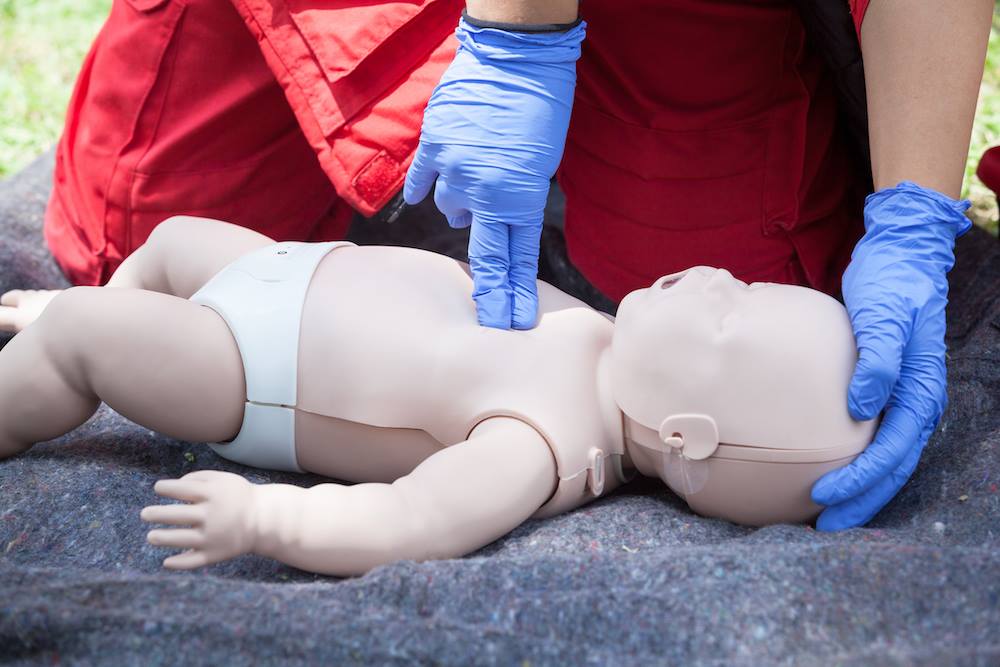
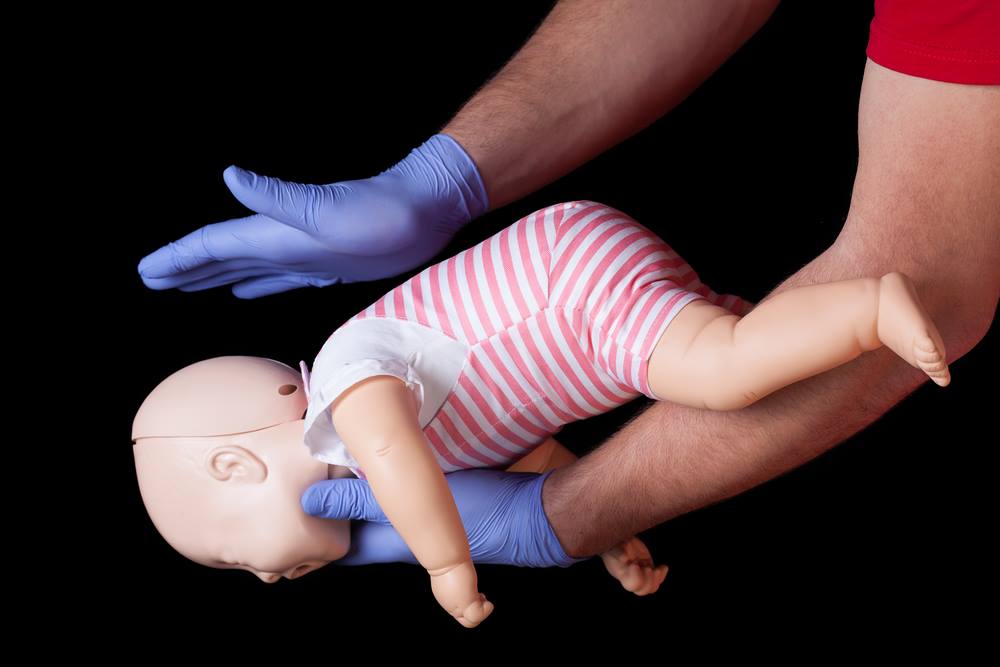
As soon as choking is observed, it is time to react. Use blows to the back (between the shoulder blades) and chest thrusts. With older children, you might find they are able to take a breath and cough. If this is the case, allow them to do so: it’s always better to allow the child to clear the obstruction themselves, if possible. Using a back blow while a child is breathing-in can cause the object to fall further into the trachea and make matters worse.
Whatever you do, if you are treating a young child for choking avoid the temptation to practice the Heimlich manoeuvre as this could cause damage to internal organs.
Finally, if in doubt, shout! Objects can get stuck in the oesophagus too (that’s the ‘food pipe’). When this happens, breathing is still possible – as is talking – but the item may need to be removed at hospital to prevent further complications and allow normal eating and drinking to resume.
Seeing Your Child In An Emergency Can Be Horrifying – Feeling Helpless is Worse
With the help of our training, you’ll sleep easy knowing that you’re prepared for almost every emergency.
- If your child is burnt or scalded, you’ll be prepared.
- If your child eats something and starts choking, you’ll be prepared.
- If your child experiences a sudden seizure, you’ll be prepared.
- If your child has been underwater and drowning, you’ll be prepared.
- If your child is suffering from a super-high fever, you’ll be prepared.
- If your child suffers a severe allergic reaction, you’ll be prepared.
- If your child swallows poison or a household substance, you’ll be prepared.
- If your child has an accident and breaks a bone, you’ll be prepared.
For the Price of a Restaurant Dinner, You Can Know PRECISELY How to Deal with Your Child’s Emergency…
Our most popular course is the Kids FIRST Aid — 3 Hour Course
This engaging and practical course covers the 10 most common emergency situations. At the end of 3 hours, you’ll know precisely how to deal with the emergency situation before the paramedics and first responders arrive. You’ll also receive a take home poster to remind you of the correct techniques.
Your entire workshop tuition is just AU$ 85 per person (plus GST). A nominal sum to ensure you’re equipped to respond to a first aid emergency, whenever the need arises.
Unlike many other first aid courses, ALL our workshops are delivered by qualified and experienced paramedics – many of whom are parents themselves.